
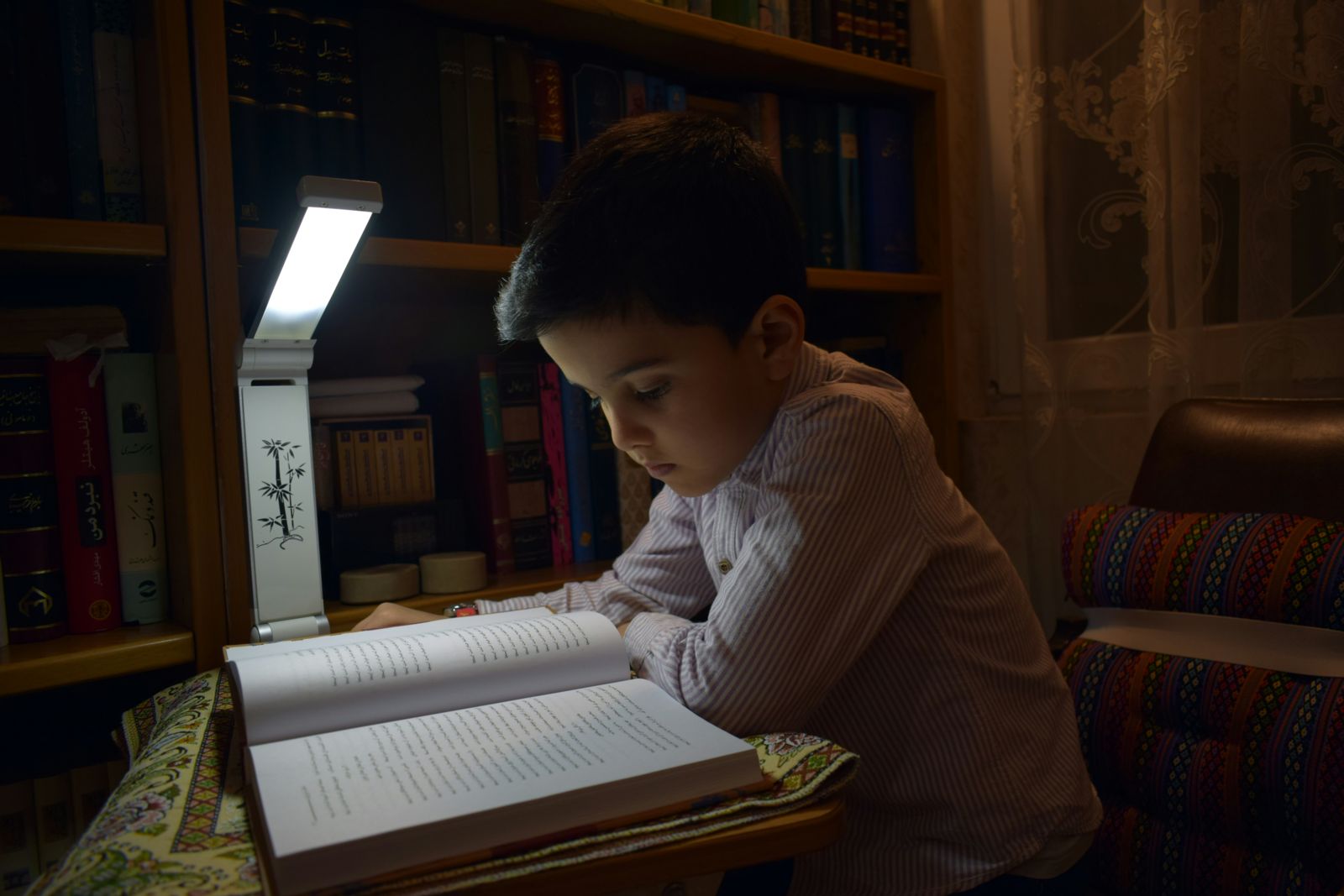
I grew up in Iran speaking Azerbaijani Turkish at home. Then I started school, and my language disappeared. From day one, all instruction was in Farsi, a language I barely knew. My home language was not a bridge to learning. It was a problem to be overcome.
Decades later I returned to Iran to examine this experience both as a researcher and as a member of the community I was studying. My findings confirmed what I had always felt: for millions of children in Iran, the classroom is a site of their language’s systemic erasure—and with it, a piece of their identity.
A multilingual country with a monolingual school system
Iran is home to more than 85 million people and more than 70 languages. Azerbaijani Turks make up roughly a quarter of the population. Kurds, Arabs, Baluchis, and Lurs make up much of the rest. Altogether, Farsi is not the home language of nearly half of all Iranians.
Yet in every Iranian classroom, there is only one language of instruction: Farsi.
Iran’s National Curriculum Document frames this uniformity as a matter of national identity. Farsi, it asserts, is a symbol that encourages cohesion and ensures the unity of all Iranian ethnic groups. Official educational policy documents go so far as to treat linguistic diversity as a handicap, categorizing bilingual and non-Farsi-speaking ethnic communities alongside populations with special needs.
The consequences of all this are documented and serious. Children who start school in an unfamiliar language perform worse academically, drop out at higher rates, and experience deeper alienation from school and their cultural identity than their Farsi-speaking peers. This is not a problem of cognitive ability. It is a problem of access.
Rights that exist on paper but not in practice
Here is the central contradiction: Iran has already agreed, under international law, to protect these children.
Iran is a State Party to the United Nations Convention on the Rights of the Child (CRC), which guarantees every child the right to education on equal terms. The CRC further requires that education affirms a child’s own cultural identity, language, and values, and it explicitly protects the right of children from linguistic minorities to use their own language.
Teaching Azerbaijani-speaking children exclusively in Farsi violates all these protections. By refusing to teach these children in a language they understand, the system denies them meaningful access to learning in violation of the CRC.
Iran’s constitution acknowledges that linguistic diversity exists. But acknowledging a reality and protecting it are not the same thing. A recent regulatory measure requires preschool children to demonstrate proficiency in Farsi before entering state kindergartens, potentially barring children for whom Farsi is a second language from public education before they even begin.
What teachers told me
In carrying out my research, I conducted focus group interviews with first-grade teachers and human rights activists in Iran’s East Azerbaijan province. In this region, Azerbaijani Turkish is the dominant community language, but Farsi remains the only language of instruction.
The conversations were sensitive. Iran’s political climate frames any advocacy for linguistic rights as a potential sign of separatism, and participants feared the professional consequences of simply discussing the issue. This fear is revealing: when teachers cannot talk openly about their students’ needs, something is deeply wrong.
The teachers described a classroom environment of confusion and disengagement. Children were unable to follow instruction and fell behind simply because the language of teaching was not their own. Teachers told me that their professional training included not a single module on multilingual pedagogy. They had been prepared to teach in Farsi only and provided no tools to support non-Farsi-speaking children.
Yet, they did not describe multilingualism as a threat to national unity. They described it as a path toward better outcomes in children’s literacy, cultural confidence, and social cohesion.
What works elsewhere
Multilingual education is not a utopian vision. Countries across Asia and beyond have made it a reality. The Philippines recognizes 19 regional languages as the foundation for early schooling and only requires that the transition to Filipino and English take place in students’ later years. The introduction of home-language-based multilingual education resulted in higher literacy rates, lower dropout rates, and stronger cultural identity—not the fracturing of national unity. Nepal has embedded dual-language instruction into teacher training. And Bangladesh and Vietnam have developed community-engaged approaches that bring families into the process of language preservation.
None of these countries abandoned a national language, and all of them found that supporting linguistic diversity strengthened, rather than weakened, national cohesion.
A political choice, not an inevitability
Iran’s government justifies Farsi-only education as necessary for national unity. But the evidence does not support this claim. Linguistic uniformity has not reduced ethnic tensions in Iran. In fact, resentment caused by linguistic erasure has helped sustain these tensions.
Iran’s monolingual education policy is not inevitable. It is a political choice, made by the government, encoded in documents, and renewed each year without reform. It is also a choice that violates the rights of millions of children under treaties Iran has signed.
The teachers and human rights activists I spoke with could see a different path forward. The question is whether Iran’s policymakers are willing to look at what both the evidence and the law tell them.
Teaching a child in a language they understand is not a radical demand. It is a basic right.