
The Rohingya, a predominantly Muslim ethnic minority from Myanmar’s Rakhine State, have faced decades of systematic discrimination, exclusion, and violence. Although many Rohingya families have lived in Myanmar for generations, the state has gradually stripped their members of legal recognition. Most crucially, the 1982 Citizenship Law removed the Rohingya’s citizenship, redefining them as outsiders in their own country and rendering many stateless.
Conditions for the Rohingya declined dramatically in 2017. That year, Myanmar’s military launched widespread operations involving mass killings, sexual abuse, and the destruction of Rohingya villages. The violence forced more than 700,000 Rohingya to flee to neighboring Bangladesh, and the United Nations later described these attacks as having “genocidal intent.”
The problem of statelessness
Today, nearly one million Rohingya remain displaced, and the underlying structures that produced their statelessness remain largely unresolved. To call this crisis a humanitarian emergency, while accurate, is incomplete. Such a label focuses on suffering without fully explaining its cause. The reality is more specific: the statelessness of the Rohingya is not accidental but consciously constructed, the result of deliberate legal and political design.
Without citizenship, basic rights become conditional. The UN Refugee Agency estimates that millions globally lack nationality, limiting their access to education, healthcare, and legal protection. In Myanmar, Rohingya communities continue to face these very challenges as well as restrictions on movement and marriage. These policies do not operate in isolation. They form a system of institutionalized discrimination that over the decades has gradually normalized exclusion and enabled large-scale violence.
Beyond borders: displacement without resolution
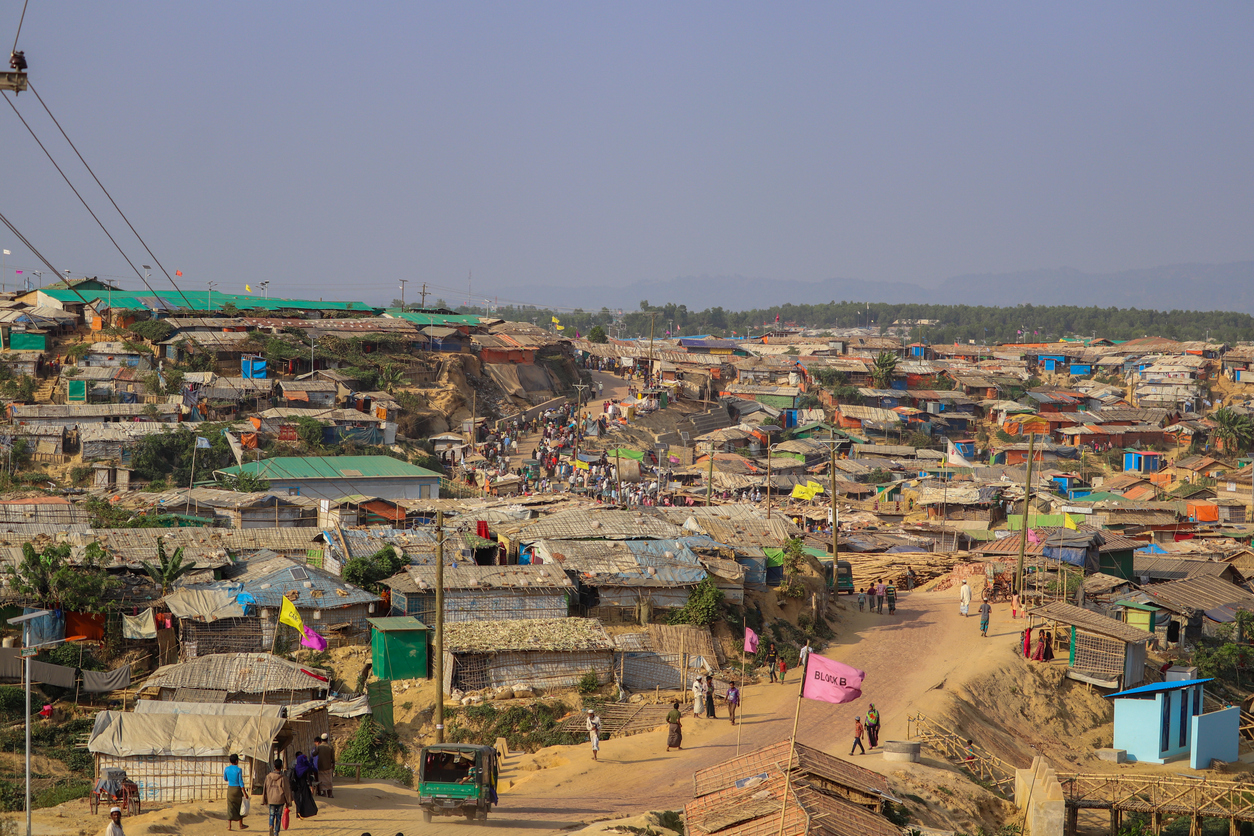
When more than 700,000 Rohingya fled Myanmar to Bangladesh in 2017, they escaped immediate threat. Exile, however, has not resolved the underlying problem; it simply shifted its scope and focus. Today, nearly one million Rohingya live in camps in Cox’s Bazar, one of the largest refugee settlements in the world.
Bangladesh has provided critical humanitarian protection, but restriction nonetheless defines life in the camps. Refugees face limits on movement, formal employment, and higher education. The World Bank notes that depriving displaced populations of access to livelihoods prolongs dependency and delays recovery.
For young people, the consequences are immediate. Many have access to basic education, but few pathways exist for advanced certifications or employment. According to UNICEF, gaps in formal education systems reduce long-term opportunities and increase the risk of marginalization. This perpetuates a structural imbalance between burgeoning aspirations and constrained opportunities.
The global responsibility gap: from aid to rights-based solutions
The international community has acknowledged the scale of this ongoing crisis. Legal action at the International Court of Justice, initiated under the Convention on the Prevention and Punishment of the Crime of Genocide, marks an important step toward accountability. However, such processes take time, and their outcomes depend on sustained political support.
Meanwhile, broader humanitarian responses face serious challenges. UN-coordinated fundraising appeals frequently fail to meet their goals, affecting the provision of food, shelter, and essential services. This gap between the international community’s recognition of the problem and its practical response reflects a more general challenge: international human rights systems are strong in principle but often limited in enforcement.
This tension is at the heart of the Rohingya crisis. Violations are documented. Legal frameworks exist. Yet implementation remains inconsistent. Without political will, accountability mechanisms struggle to make timely impacts. Real progress toward resolving structural exclusion will require a shift toward rights-based approaches. Durable solutions to large-scale, enduring problems like the Rohingya crisis must include legal identity, effective access to livelihoods, and participation in decision-making.
At the same time, community-driven efforts are emerging as important sources of resilience. Research on refugee self-reliance highlights the role of local leadership, education initiatives, and youth engagement in strengthening social and economic stability. However, these efforts require policy space and support to scale.
Recognizing design, enabling change
Reframing the Rohingya crisis as a product of systemic design changes the terms of engagement. It shifts focus from emergency response to structural accountability. It emphasizes that statelessness is often not simply a gap in governance but rather the result of deliberate policy choices.
Addressing this reality requires equally deliberate responses, including restoring legal identity, expanding access to education and livelihoods, and strengthening accountability mechanisms. Evidence from international organizations and field research consistently points to the same conclusion: Without addressing the root causes of exclusion, violence, and displacement, solutions will remain temporary.
The persistence of the Rohingya crisis is not due to lack of awareness. Instead, it reflects the difficulty of translating recognition into action. Such translation remains one of the most urgent challenges for the global human rights system today.
Why this matters beyond one crisis
The Rohingya case is not isolated. Discriminatory laws worldwide leave millions stateless. The #IBelong campaign highlights how a lack of nationality continues to limit access to fundamental rights across regions.
This raises a broader question: How resilient are global human rights protections in the absence of secure legal identity? The Rohingya experience shows how a narrow definition of belonging can exclude entire populations from protection systems. This challenges the universality of human rights principles.
For global audiences, the relevance is direct. Systems that allow exclusion in one context can be replicated in others. Addressing statelessness is therefore not only a regional concern but also central to maintaining the integrity of international human rights norms.