
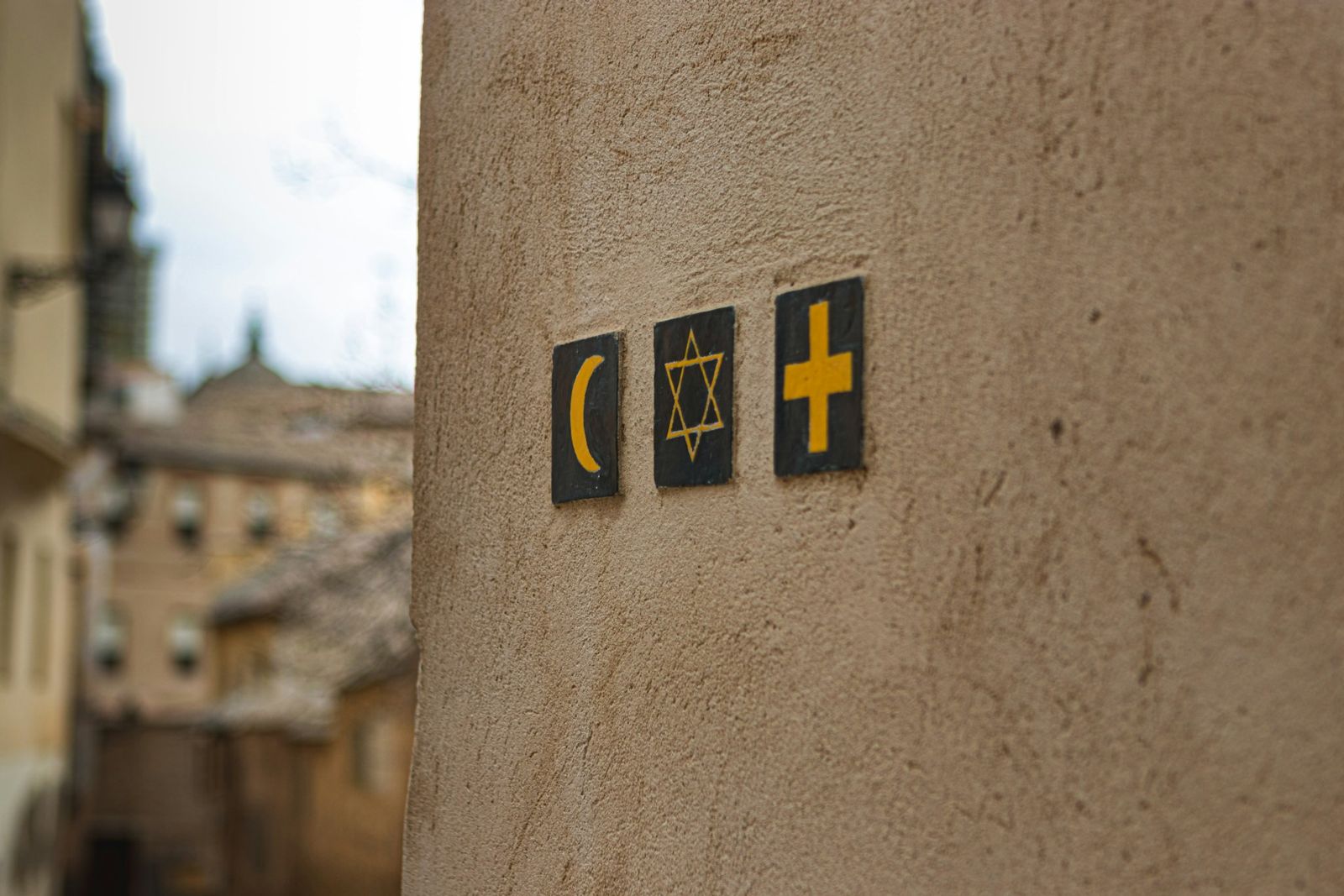
A crucial blind spot for those in the human rights field continues to cost lives unabated. Over decades, human rights discourse has elaborated every way religion wounds people, an assessment that shapes policies, training, and instincts in the field. At the same time, it has expressed only a fragmented awareness of religion’s capacity to protect. In a year when humanitarian funding has collapsed and states are retreating from the people they are meant to protect, this unbalanced perception of religion is a cost that human rights advocates can no longer afford.
A right protects no one on its own. It becomes tangible only when someone present is trusted and willing to uphold it. Where the state has failed, that someone is very often a person of faith, a fact that the human rights field has become reluctant to admit over time.
Neutrality has become selective
When armed men attacked the villages of Barkin Ladi in Nigeria’s Plateau State in June 2018, an 83-year-old imam, Abdullahi Abubakar, hid 262 fleeing Christians in his mosque and home, standing in the doorway and offering the attackers his own life rather than surrender the Christians. Genuine trust built across decades, something no institutional intervention can replicate, made this possible. Abubakar’s mosque stood on land Christians gave his community 40 years earlier. No fly-in assessment team can manufacture such a history. This kind of trust is the scarcest resource in humanitarian protection. It is something that faith communities, and not the international system, hold.
So why does the human rights field keep religion at arm’s length? Because it remembers only harm inflicted in the name of faith. And we must not romanticize the truth: religion can coerce, it can exclude, and it can sanctify violence. The men who attacked Barkin Ladi claimed a faith of their own. Far too many people killed in the name of God lie buried in my country. The safeguards we have built against religious harm, from bans on proselytization to principles of impartiality and neutrality, exist for good reason and must hold. But guarding against the harm inflicted in the name of religion does not necessitate ignoring the protection religion can offer. We have confused the two and called it neutrality.
Acts of religious protection are ever central and largely unwritten in our histories. When Guatemala’s government refused to account for its civil war, it was the Catholic Bishop Juan Gerardi who led a project that gathered thousands of testimonies and documented more than 55,000 human rights violations the government sought to bury. Two days after Bishop Gerardi released the report, attackers beat him to death in his garage. A United Nations truth commission later confirmed everything he had found. Bishop Gerardi did the work of documenting atrocities and paid with his life. But ask the humanitarian field to name its martyrs, and his name rarely comes up.
Religion can protect as well as persecute
Faith communities make up a substantial share of civil society capacity in those regions most exposed to crisis. At the 2016 World Humanitarian Summit, more than 160 faith actors articulated their commitment to protection. But as Elizabeth Ferris wrote in the International Review of the Red Cross, secular voices dominate the study of human rights. Alastair Ager shows that the field inherited a worldview that treats belief as a matter of individual conscience or an obstacle but never as a source of protection. Our training as human rights defenders has built such a skewed understanding of religion into our way of thinking.
I write as a humanitarian practitioner and a Jesuit scholastic who has worked on both sides of this line. I know the protection faith offers because I have relied on it, and I know the discipline it demands. Years ago, when running a children’s foundation in Nigeria, I was asked for half a million naira in exchange for permission to bring our work into public schools. Refusing cost us time and partnerships, but there was no question of complying with this demand. If we built our work on corruption, what standing would we have to speak on children’s rights? The choice and its moral crux came from faith. For millions of practitioners, faith is not only the source of access and trust. Faith is also the reason they do their work honestly.
If those shaping human rights policy considered religion’s potential fully, it would change how they carry out advocacy. It would mean identifying faith networks in protection planning from the start, not including them ad hoc and mid-response. It would mean actual partnership on clear and enforced terms instead of a wary institutional distance that protects no one. And it would mean grasping the fact that religion can be something other than a threat to human rights work. If human rights advocates continue to view religion in a negative light, they forgo a key relationship that could help manage the danger posed by weaponized faith. The threat is not eliminated by distance. It merely ensures that our options for mitigating it are limited.
After the state, faith
The collapse of humanitarian funding has stripped the system down to essentials. In places now abandoned by the human rights infrastructure, faith communities are often all that remains between people and the violence of the state. We can keep treating these groups as a risk to be managed at arm’s length and keep being surprised by who suffers the consequences. Or we can acknowledge what the imam in that doorway protected with his life and what the bishop died for: proving that where the state disappears, faith remains. Human rights will endure only if we are humble enough to stand alongside religious allies before the shooting starts.
When funding spaces reopen and humanitarian workers return, let’s not forget to embrace faith leaders as collaborators in the single mission of healing the world and ensuring our common humanity is protected, respected, valued, and loved.