
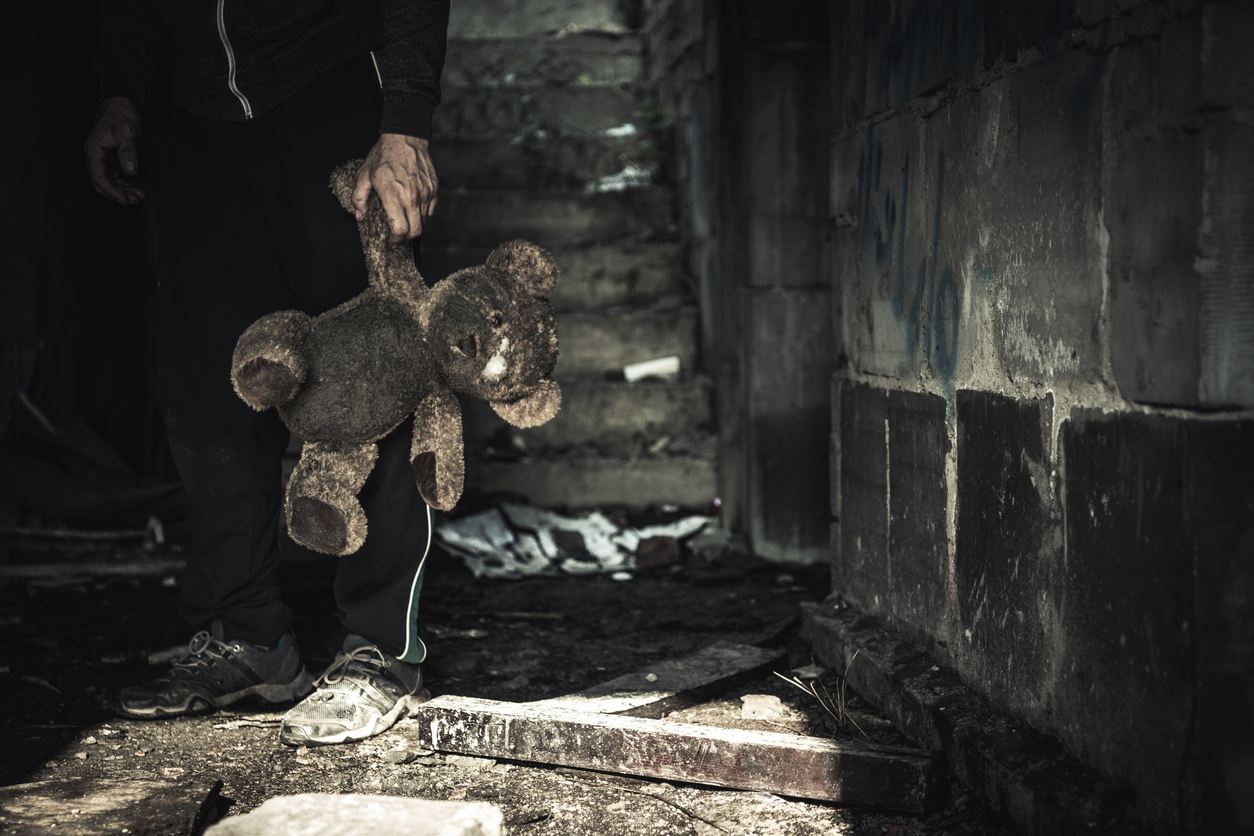
“There can be no keener revelation of a society’s soul than the way in which it treats its children,” observed Nelson Mandela. As the UN Committee on the Rights of the Child emphasized, “children must never be treated as collateral damage.” By this measure, the world today faces a profound moral crisis. Children, defined here as individuals under 18, die and suffer rights violations in wars they did not start and do not understand. More than one in six children globally live in areas affected by conflict. These children continue to suffer while global leaders—including UN member states—fail to uphold their human rights commitments and honor the extensive legal framework intended to protect them.
Recent conflicts expose a widening gap between legal commitments and reality. The problem stems from deep failures of both implementation and accountability. UN member states, particularly those with significant political and economic influence, have inconsistently enforced their collectively established norms. This inconsistency weakens the authority of international humanitarian and human rights law and exacerbates violations of children’s rights in conflict.
A growing crisis, inadequately addressed
Since the COVID-19 pandemic, armed conflict has become more common and more intense—placing children at greater risk of killing, maiming, and deprivation. Conflict also disrupts children’s futures, undermining their ability to become “agents of positive change.” Protecting children, then, is central to building sustainable peace and security.
The Convention on the Rights of the Child, the most widely ratified treaty addressing the needs of children, requires signatories to protect children affected by armed conflict and to respect international humanitarian law. Similarly, the Geneva Conventions mandate the protection of civilians and prohibit attacks on civilian infrastructure, including schools, hospitals, and water systems. The UN’s Six Grave Violations Against Children During Armed Conflict explicitly calls out recruitment and use of children as combatants, killing and maiming, sexual violence, attacks on schools and hospitals, abduction, and denial of humanitarian access. Yet despite these clearly defined obligations, violations continue at scale.
Between 2005 and 2020, more than 104,100 children were killed or maimed in armed conflict; more than 93,000 children were recruited and deployed in combat; at least 25,700 children were abducted; and more than 14,200 children were subjected to sexual violence. Data additionally records more than 13,900 attacks on schools and hospitals and nearly 14,900 denials of humanitarian access.
Researchers consistently link the use of explosive weapons in populated areas with violations of international humanitarian and human rights law. Claims of precision in warfare are often overstated, and factors such as blast radius and urban density significantly increase civilian harm. While the presence of armed groups in civilian areas complicates military operations, it does not absolve any party of its obligation to protect children.
In the Middle East, child casualties continue to rise. Reports indicate that more than 1,100 children have been killed or injured in the region, including 200 in Iran and 91 in Lebanon, since February 28. Evidence from Gaza illustrates the scale of noncompliance with international obligations, raising the question of the effectiveness of global mechanisms to protect children.
Conflicts have also led to school closures, disrupting children’s development. Research shows that the disruption and destruction of schools and other social and institutional support systems for children, including families and healthcare, compound the impact of conflict. The growing frequency of attacks on schools is particularly alarming. As Volker Türk noted, such attacks increased by 44% in 2024, depriving an estimated 52 million children of schooling. He emphasized that those responsible for such attacks must be investigated promptly and transparently to ensure accountability.
Political considerations lead to inconsistent enforcement
The failure to enforce international human rights law is fundamentally political. UN member states, particularly those in the Security Council, G7, and G20, ought to serve as the principal upholders of the international legal order. Yet their responses to violations against children remain inconsistent, largely passive, and often shaped by geopolitical interests. While states condemn abuses in some contexts, silence or ambiguity prevails in others. The selective application of norms and discrepancies in accountability weaken the law.
Solutions, however, are possible. First, global leadership must consistently condemn violations against children, regardless of who is involved. Second, UN member states must ensure full compliance with international humanitarian law, including safe delivery of humanitarian assistance. Third, violations must have tangible consequences, including sanctions, legal accountability through mechanisms such as the International Criminal Court, and reparations. Fourth, sustained funding and monitoring mechanisms must be put in place to strengthen accountability. Finally, where risks of conflict escalation are high, states must act collectively to prevent violence and prioritize the protection of civilian infrastructure.
Progress is possible
Sustained international engagement can lead to progress. The implementation of action plans and other preventive efforts in countries such as Iraq, Pakistan, the Philippines, and Somalia has led to real progress. A recent UN report similarly highlights child protection as an entry point for peacebuilding. Peace negotiations in countries such as Colombia and South Sudan have turned to child protection measures to build confidence between combatants and generate the political will necessary to resolve conflict and build a sustainable peace. Nigeria and Chad have taken steps to enshrine child protection in training for their armed forces.
Volker Türk recently cut to the heart of the matter in stark terms: “Whatever differences countries have, we can all agree they will not be solved by killing school children.” The world can be safer for children—but only if those with the power to enforce the rules choose to do so.
More than a century ago, Eglantyne Jebb mobilized global attention to address the suffering of children in war and laid the foundation for modern child rights. At a time when children are increasingly exposed to warfare, the global community must revive that spirit of leadership and recognize their fundamental obligation to protect children.