
Almost 78% of eligible voters, the highest since 1999, took part in Israel’s recent dramatic elections. The high turnout and sense of urgency permeated all parts of society: Jews and Arabs, the periphery and the center, big cities and rural areas.
While the meaning of the results is not yet clear, we can already draw some conclusions that speak to both possible directions for Israel and broader questions of human rights.
The electoral dilemma
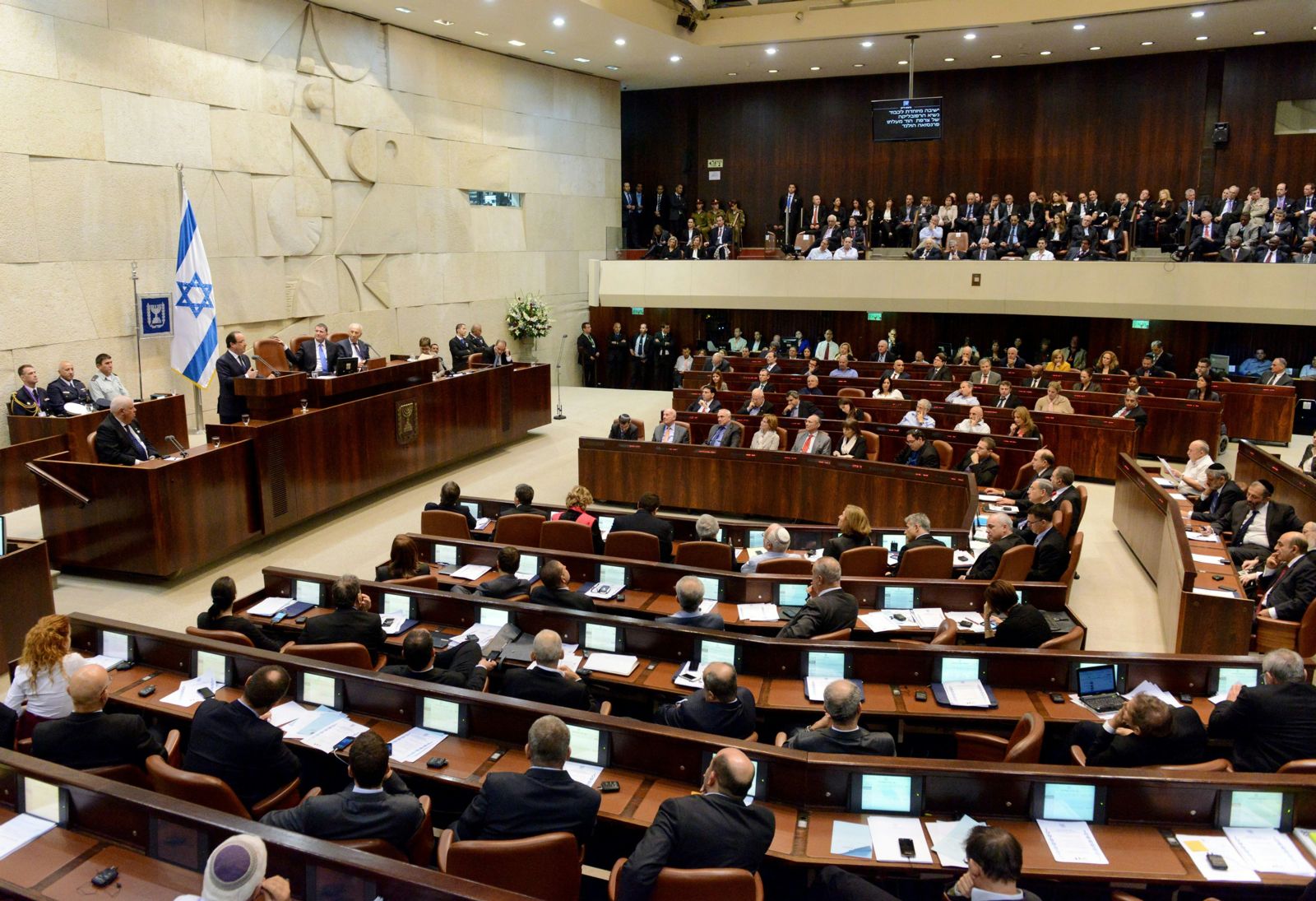
Before discussing the possible consequences of the elections, I will briefly describe the Israeli political system. Israel has a parliamentary system in which the government is formed on the basis of a majority in the Knesset (61 out of 120 members). Minority governments are possible: it is enough to have more votes supporting than opposing, and parties can support a government without entering a coalition. However, such governments are not stable.
Israel has one of the world’s smallest parliaments in proportion to its population. The Knesset is supposed to review the government’s actions, but in reality, members almost always vote along party lines, which makes the legislative branch ineffective in reviewing and scrutinizing the executive branch. In practice, Israel’s Supreme Court is the only effective check on governmental power. As a result, the government has constantly attacked its authority in recent years.
In the most recent election, the far-right coalition that has maintained Prime Minister Benjamin Netanyahu in power lost its majority. While Netanyahu’s party kept most of its seats in the Knesset and performed better than expected, his coalition partners lost ground. In its current makeup, it now has 53 seats, not enough to form a government.
The other 67 seats are divided between Arab parties and Jewish-Zionist anti-Netanyahu parties. Both the Joint List (formed from a union between the Communist Party and Palestinian nationalist parties) and the United Arab List (a moderate Islamist party) performed well—turnout in Arab regions of Israel was higher than expected.
The Jewish-Zionist anti-Netanyahu bloc is led by centrist former general Gadi Eisenkot, who aims to be Israel’s first prime minister of North African origins. His support includes right-wing secular parties and the left-wing Democrats. While this bloc has 48 seats, this might not ultimately be enough to replace the far-right coalition.
A grand coalition, Jewish-Arab cooperation, or new elections?
The first option for a new government would entail a coalition formed by the anti-Netanyahu bloc with some support from the Arab parties. Such a coalition, similar to the one that ruled in 2021 and 2022 before the current government, could create opportunities for human rights in Israel. It could allocate resources to rejuvenate neglected Arab towns and cities. Arabs make up 20% of Israel’s population, and their communities suffer from record-breaking levels of violent crime, economic inequality, and discrimination in education, health, and welfare services. A government with the Arab parties’ support or participation could address these long-standing issues.
However, such a government might be unstable. The various groups involved have fundamentally different attitudes toward the state, its identity, and its conflict with the Palestinians.
Another option is a grand coalition government formed by Netanyahu’s party, Eisenkot, and the center-right—everyone, effectively, except the left or the far-right. The problem with this possible coalition is that it might not actually be very effective as a government. Internal polarization and lack of trust could hamstring the ability of such a coalition to make progress on any of the country’s pressing issues. Between 2020 and 2021, Netanyahu had a similar power-sharing agreement with centrist leader Benny Gantz. Initially, both leaders agreed to serve as prime minister for 18 months, with Netanyahu going first, but Netanyahu did not honor his side of the agreement and called fresh elections before Gantz could assume power.
Both these scenarios would force the Jewish center-right parties to break their promises not to form a coalition with either Netanyahu or non-Zionist parties (i.e., Arab or Jewish ultra-Orthodox parties).
Assuming no political defections (Netanyahu attracted defectors from other parties to bring down the previous government), the final scenario is failure to form any government, which means new elections. This is probably Netanyahu’s best chance to try and regain his majority. The mere existence of this possibility reduces the likelihood that Netanyahu will agree to any power-sharing deal.
The stakes for human rights and democracy
All the possible scenarios have crucial consequences for human rights in Israel and the region at large. Israel is currently facing a major accountability crisis for its war crimes in Gaza, settler violence in the West Bank, and treatment of Palestinian detainees. Netanyahu and two ministers are wanted by the International Criminal Court, but most opposition leaders do not support their extradition. Those who investigate such crimes face immense pressure from the government and its supporters not to prosecute or charge the perpetrators.
Of course, the ongoing conflict in Gaza is not the only human rights issue in Israel. The outgoing government tried to curb the Supreme Court’s power to serve as the only effective check on executive power in Israel. Furthermore, Netanyahu’s religious coalition partners continue to promote legislation that enforces Jewish ultra-Orthodox religious laws or strengthens the hold of the religious establishment. The question of equality between ultra-Orthodox Jews (who are exempt from the draft) and the rest of the country was a major electoral issue.
Even if a government forms in this fragmented political landscape, it may not be able to actively oppose the populist push against human rights and the rule of law and stop Israel’s long-term democratic decline. But new elections and better results for the far-right coalition could have devastating consequences, further accelerating Israel’s descent into authoritarianism.
A Jewish-Arab political partnership, however, could open the dialogues necessary to advance human rights. Such a coalition could make real changes and improve social cohesion between at least a portion of the Jewish population and the Arab minority. The question is whether Israel’s leaders have the courage to accept the political cost of seeing it through.