
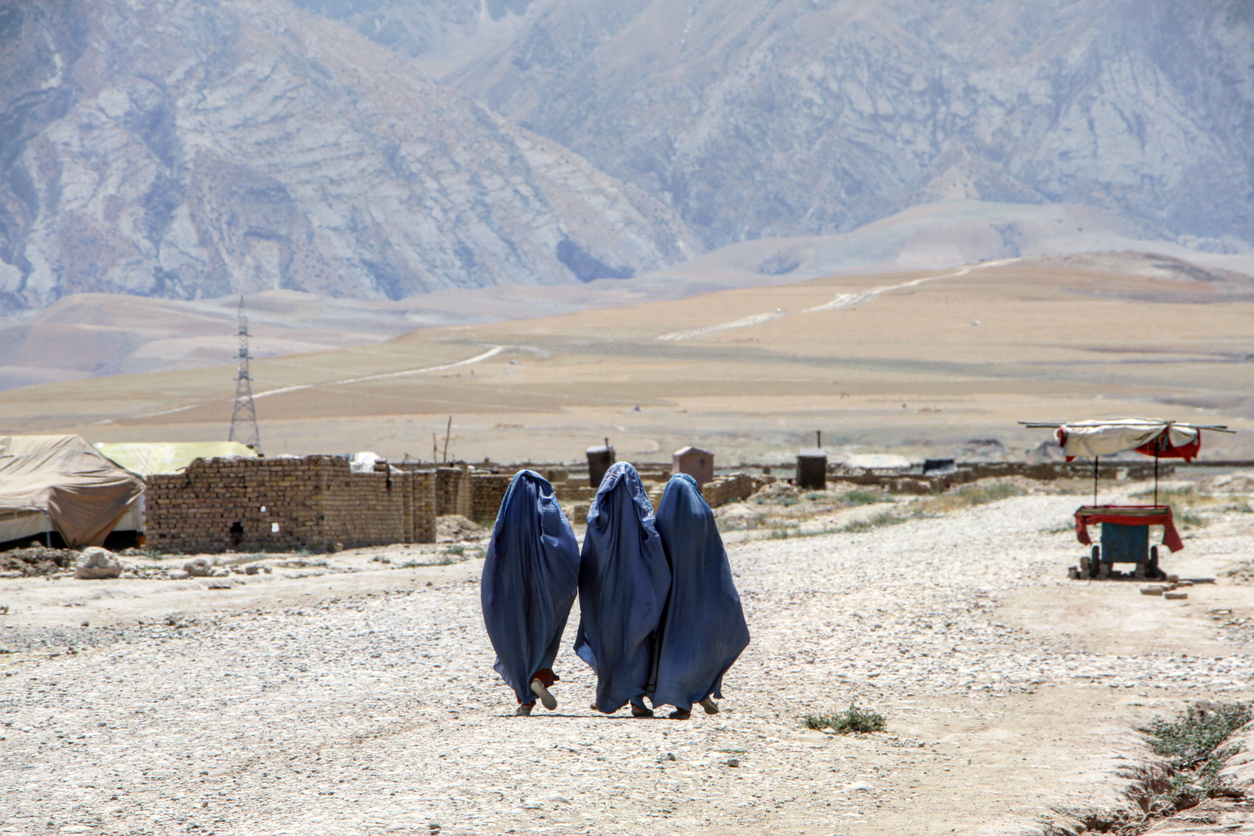
Women’s rights in Afghanistan have faced a systematic and unprecedented rollback since the Taliban’s return to power in August 2021. Educational opportunities have been severely curtailed, employment options sharply reduced, and public participation largely denied to women and girls. Reports from UN Women and the UN Human Rights Council document alarming declines in girls’ secondary school enrollment and women’s workforce participation. Humanitarian programs focused on women’s empowerment are often limited, delayed, or heavily conditional.
International attention to Afghanistan often focuses on counterterrorism, humanitarian access, and regional stability—relegating rights violations to a secondary concern and potential pawn in negotiations. Yet treating women’s rights as negotiable has profound consequences. It risks normalizing gender-based oppression, and it undermines the credibility of global human rights frameworks. Afghan women are not abstract subjects of policy—they are active citizens whose exclusion from public life erodes both moral and strategic principles of international law.
Pragmatism vs. principle: the international response
The international community’s responses illustrate a tension between pragmatism and principle. Sanctions, diplomatic engagement, and humanitarian carve-outs intended to curb the Taliban’s broader conduct have inadvertently entrenched gender apartheid. Governments and international organizations, sometimes with the tacit approval of UN agencies, have accepted the temporary exclusion of women from education or public life as a necessary compromise.
For instance, some UN-coordinated initiatives have continued to prioritize education access for boys, while accepting the exclusion of girls, justifying this decision as necessitated by security and political constraints. Such compromises implicitly communicate that women’s rights are negotiable, contingent on political expediency, and not inalienable.
Similarly, statements by some diplomatic actors have focused on regional stability rather than the human rights of women and girls. While understandable from a security perspective, these choices set a dangerous precedent by suggesting that strategic interests can override the protection of fundamental freedoms.
Evidence of systematic oppression
Documented restrictions highlight the severity and systemic nature of the rollback of girls’ and women’s rights. Girls are prohibited from attending secondary school in most provinces, effectively denying more than one million young Afghans access to education. At the same time, women in government, media, and NGOs face widespread dismissal, and opportunities in the private sector remain extremely limited. In addition, restrictions on unaccompanied travel and the enforcement of segregated public spaces significantly limit women’s mobility and ability to participate in civic and political life.
These measures are codified and institutionalized, leaving little room for individual discretion. Research from Human Rights Watch, UN reports, and testimonies from verified media accounts underscore the persistence of these violations and offer concrete evidence of the daily challenges Afghan women face.
Consequences for global human rights
Normalizing gender-based oppression threatens the effective enforcement of international human rights in the long term. Treating women’s rights as negotiable undermines universal standards, weakens advocacy frameworks, and sends a troubling message to other states: systematic discrimination is tolerable if politically convenient. By prioritizing geopolitical stability and humanitarian access over gender equality, the global community risks entrenching injustice and perpetuating cycles of exclusion and disempowerment. Afghan women are not only losing rights—they are also disappearing from policy discussions affecting them directly.
Policy recommendations: making rights nonnegotiable
The international community must reverse course and adopt a principled approach that treats women’s rights as nonnegotiable legal obligations. This requires enforcing binding commitments to gender rights under international human rights law, including the Convention on the Elimination of All Forms of Discrimination against Women (CEDAW), regardless of whether doing so is politically expedient. It also involves designing programs targeted at empowering women through access to education, employment, and civic participation, supported by transparent monitoring mechanisms. Furthermore, international efforts must actively amplify Afghan women’s voices by centering them in policy-shaping conversations, negotiations, and decision-making processes.
Embedding these measures in binding international agreements can help prevent the normalization of oppression, reinforce accountability, and reaffirm the universality of human rights protections. Honoring women’s rights as nonnegotiable not only upholds moral and legal obligations but also contributes to sustainable, long-term societal stability.
Gender apartheid as an emerging legal category
Beyond immediate humanitarian and political concerns, the situation in Afghanistan raises a deeper legal question: should international law treat the systematic exclusion of women from public life as gender apartheid? There is growing consensus among scholars, UN experts, and human rights advocates that the Taliban’s policies constitute an institutionalized system of gender-based segregation and domination that exceeds standard definitions of discrimination.
“Gender apartheid” as a category is not yet codified in international criminal law in the same way as racial apartheid, which is defined under the Rome Statute of the International Criminal Court. However, the legal elements of apartheid—systematic oppression, institutionalized discrimination, and denial of fundamental rights—are visibly present in the treatment of Afghan women. Official decrees and enforcement mechanisms exclude them from education, employment, political participation, and freedom of movement. This is not sporadic abuse; it is state-structured inequality.
Recognizing gender apartheid as a legal and political category would provide the international community with a responsive, enforceable structure for accountability. It would also strengthen advocates’ position by treating the crisis as a systemic violation of international norms rather than a temporary cultural or political anomaly. Naming the problem accurately matters. Legal terminology shapes diplomatic leverage, international pressure, and the architecture of accountability.
Beyond moral responsibility
Afghanistan’s situation is more than a moral crisis; it is a strategic challenge for the global human rights ecosystem. Normalizing gender-based oppression erodes credibility, undermines advocacy, and weakens enforcement mechanisms.
International actors must pivot from compromise and commit to recognizing women’s rights as legally binding and ethically nonnegotiable. By adopting evidence-based policy, carrying out targeted advocacy, and amplifying Afghan women’s voices, the global community can confront this crisis responsibly and ensure that women’s rights are not sacrificed for political expediency.