
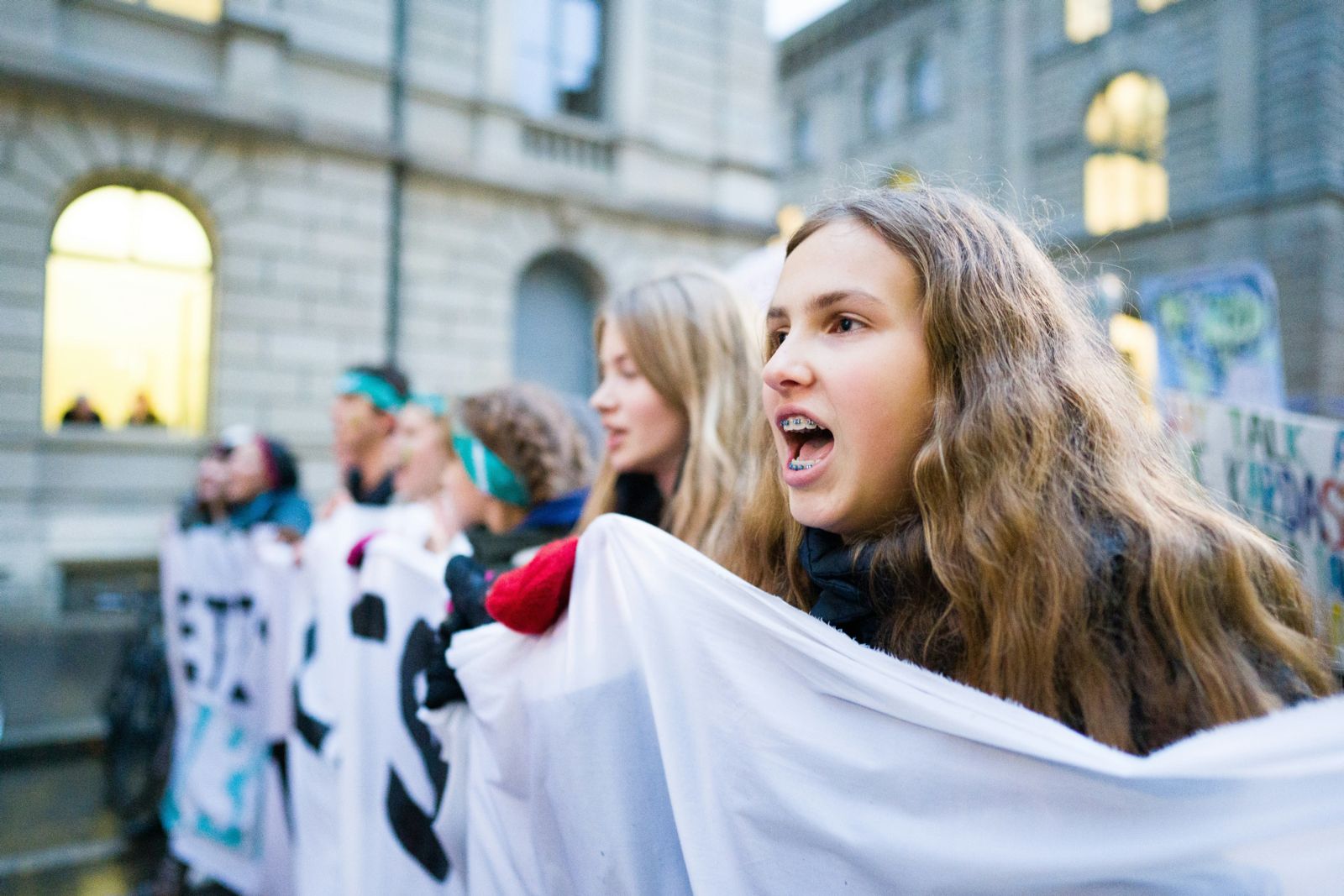
My activism did not begin with an official title, a legal mandate, or a formal position in a human rights institution. It began through the United Nations Youth Advisory Board in Uzbekistan, where I first saw that young people could speak about human rights not as an abstraction but rather as something connected to schools, families, courts, digital spaces, public policy, and the future of an entire generation.
But the more I participated in consultations and policy dialogues, the more I noticed a contradiction. Young people were invited to the table, but others, typically older actors, predetermined the terms of the conversation. Youth could share stories and offer ideas but could not make decisions. Too often their role remained closer to nominal representation than true participation or influence.
This raises an uncomfortable question: Is the promise to “leave no one behind” truly working for young people, or is youth participation merely a symbolic display of inclusion?
Young people change the shape of human rights work
Many youth councils, advisory boards, youth networks, and consultation platforms now exist within international civil society organizations, including the UN Youth Office and the UN Secretary-General’s Youth Advisory Group on Climate Change, and at the national level, such as the UN Youth Advisory Board in Uzbekistan that set me on the path toward human rights work. Young people, no longer seen as just the future beneficiaries of rights, are present in discussions on climate justice, education, equality, digital rights, governance, and access to justice. This shift is reflected in the UN World Programme of Action for Youth and UNICEF’s guidance on adolescent participation and civic engagement.
The central question is no longer whether young people are present; it is whether they have power.
Symbolic participation is easy to recognize. Governments, international organizations, and civil society actors may invite young people to speak, but still retain control over the agenda. They may describe youth as future leaders while rarely treating them as decision-makers in the present. Panel organizers may use young people’s stories to add emotional weight, but institutions do not always allow their recommendations to shape the final outcome.
However, young human rights defenders can bring new ways of thinking to the human rights field.
First, they can change the language of human rights. For many institutions, the language of human rights remains that of reports and formal statements. But young people address human rights in the language of everyday life: access to education, safety online, environmental anxiety, discrimination, and mental health. Such language permeates UNICEF’s work on adolescent participation and civic engagement, the UN Youth Office’s focus on youth and human rights, and youth-led platforms, such as U-Report, that connect young people’s concerns with public policy discussion. Youth defenders translate abstract norms into lived experience.
Second, young human rights defenders often work closer to communities than their more established colleagues. They are sometimes the first to hear about the problems their peers face: bullying, stigmatization, discrimination, violence, and lack of access to support. Their proximity is a strength; peer-to-peer advocacy can reach spaces distant from or suspicious of formal institutions.
Third, youth can change the methods of advocacy. Young defenders rarely rely on conferences and official reports. They use social media, digital communities and campaigns, peer education, and visual storytelling. Platforms such as U-Report show how young people can use digital tools to raise issues that matter to them, and youth-led movements like Fridays for Future illustrate how online mobilization can connect local advocacy with global campaigns. A short post recorded on a phone can sometimes bring more attention to an issue than a long report read only by specialists.
How to reshape advocacy structures to allow real youth participation
We cannot reduce the debate about youth human rights defenders to whether they fall under the UN Declaration on Human Rights Defenders. In legal terms, anyone who peacefully promotes or protects human rights, regardless of age, qualifies as a human rights defender.The UN General Assembly unanimously adopted the Declaration, giving it broad legitimacy, and instruments such as the International Covenant on Civil and Political Rights provide complementary legally binding obligations. The 2024 report of the UN Special Rapporteur on Human Rights Defenders also made clear that children and young people can be human rights defenders. The relevance of this recognition and the protection that comes with it are especially clear today. According to the CIVICUS Monitor 2024, 72.4 percent of the world’s population lives in countries with repressed or closed civic space, and only 40 out of 198 countries and territories rate as open.
But the more urgent question is practical: how can this recognition change the actual conditions of participation? The answer must move beyond protection to real power. If young people are invited into human rights spaces but have no influence over decisions, their inclusion remains symbolic. Good practice requires a different approach.
First, young people should be involved before agendas are finalized. Youth defenders should help define the questions, not just answer questions designed by others. Participation is strongest when young people enter the process early enough to shape its direction.
Second, youth consultations should have visible follow-up. Institutions working with young people can publish short explanations of what happened after a consultation, including which recommendations informed policy, which were not, and why. This simple step can turn participation from a symbolic gesture into a process that builds accountability.
Third, youth-led initiatives need resources, not just invitations. Many young defenders do not have registered organizations, offices, grant histories, or access to legal expertise. Small grants, mentoring, legal support, safe communication channels, and training can be more meaningful than another invitation to speak on a panel.
Fourth, adult allies should support youth without replacing their voices. Mentorship should help young people speak for themselves, not create another layer through which adults speak on their behalf.
The present and future of human rights work
Youth human rights defenders are not simply the next generation of an established movement. They are already changing how human rights work is done. They make advocacy faster, more digital, more connected to communities, and more sensitive to overlapping forms of inequality.
The challenge, then, is not only to invite young people into existing spaces but also to reshape those spaces to be receptive to young people’s influence.
If “leave no one behind” is to be more than a slogan, youth cannot remain a decorative symbol of inclusion. They cannot be invited just for photo opportunities or simply to fill out panels. Young human rights defenders must be treated as full actors in the human rights system, with their own knowledge, methods, and risks.
The question is no longer whether young people deserve a seat at the table. The question is whether the table itself is ready to change.