
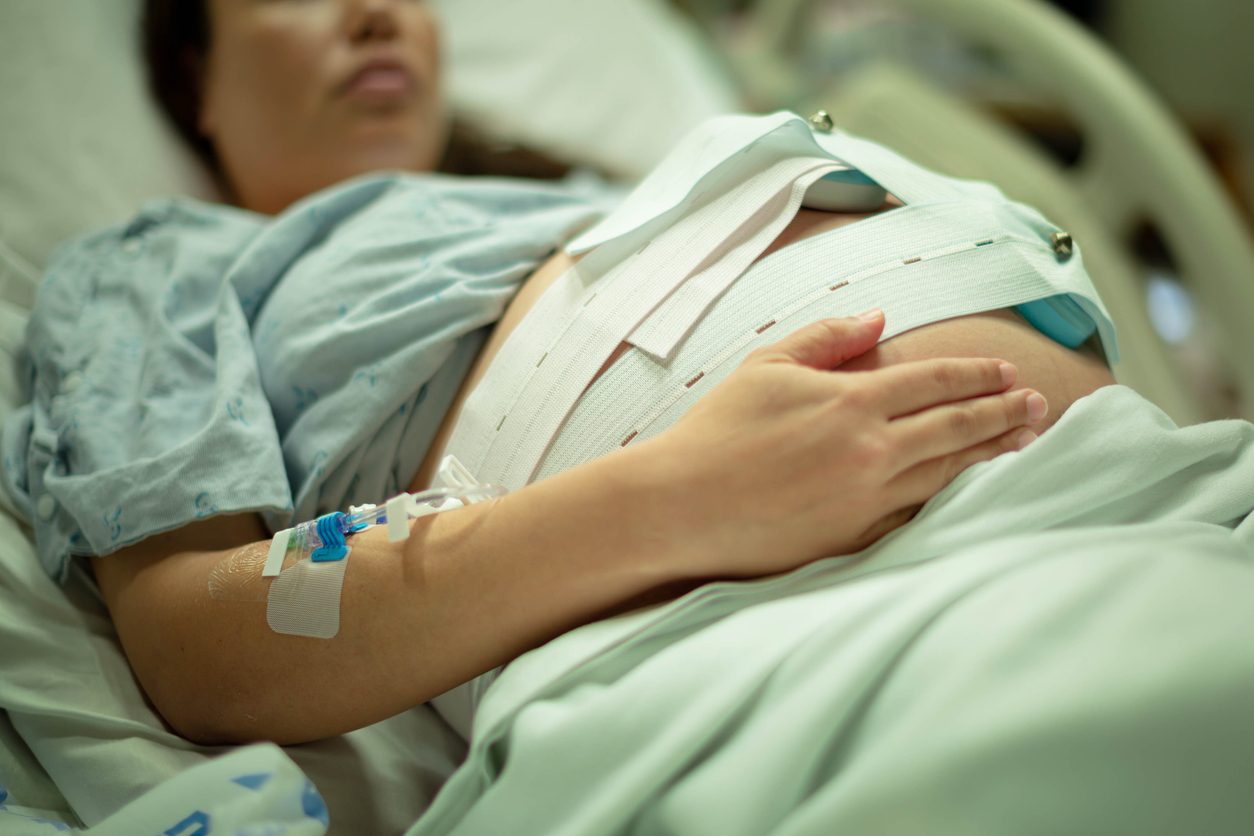
On January 9, 2019, Punitha Mohan, a 36-year-old mother, bled to death when the doctors entrusted with her care left her in the hands of unregistered nurses. Malaysian courts named what happened to Mohan “medical negligence,” but the doctors’ actions might be better described by a term Malaysian law does not yet recognize: obstetric violence. Mohan’s death is the product of a system in which medical providers normalize women’s pain, inconsistently respect consent, and insufficiently scrutinize adverse outcomes.
Global health research has extensively documented obstetric violence. However, in Malaysia interpersonal mistreatment and systemic failure remain legally unnamed, politically invisible, and absent from the country's human rights accountability framework.
A systemic failure
Public health researcher Nadirah Babji’s analysis of Malaysian women’s accounts of giving birth in hospitals found that these fit six of seven typologies of disrespect and abuse identified by the World Health Organization. Women described being ignored, subjected to degrading remarks, and pressured into procedures without informed consent. Long after childbirth, they experienced post-traumatic stress disorder (PTSD), lasting complications, and a profound erosion of trust in the healthcare system. Some admitted fearing treatment by the medical system more than childbirth itself.
Malaysia has no law that defines obstetric violence as a form of gender-based violence. Existing healthcare legislation includes patient rights provisions but lacks enforceable mechanisms to address mistreatment during childbirth. The Anti-Discrimination Against Women Bill, pending since 2019, does not cover reproductive healthcare settings. Without appropriate legislation, accountability remains elusive, and harm continues unaddressed.
The women most vulnerable to mistreatment by the medical system are systematically excluded from what scant protection exists. Indigenous Orang Asli women living in remote areas must often travel hours to reach the nearest hospital, which will often lack interpreters and advocates. The case of Kam Agong, a Lun Bawang woman from rural Sarawak, illustrates these risks: she died in 2002 after a cesarean section at a district hospital five hours from her home. More than two decades later, the hospital still has no obstetric specialist. Her case reflects not an isolated failure but rather the structural convergence of inequality, remoteness, and inadequate care. For stateless women and undocumented migrant workers, seeking care also means risking detection by immigration authorities. For these women, the choice is not between good and poor care. It is between poor care and none at all.
Violence that is invisible to international mechanisms
In May 2024, the UN Committee on the Elimination of Discrimination Against Women (CEDAW) reviewed Malaysia’s human rights record for the sixth time. Its concluding observations—the most authoritative external assessment to date of Malaysia’s compliance with its obligations toward women—do not mention obstetric violence at all. CEDAW’s report does address access to contraception, safe abortion and healthcare for migrant women, and domestic and sexual violence. But what happens inside delivery rooms, where institutional power over women’s bodies is most concentrated, remains unaddressed.
This silence is not accidental. More broadly, it reflects international oversight mechanisms’ limited understanding of gender-based violence. Organizations like the UN tend to prioritize violence in private or criminal contexts while overlooking the kind of institutional violence often embedded in healthcare systems. In part, this is a product of how state reporting frameworks ultimately shape what is visible. Even widely experienced issues may remain outside the scope of review if not explicitly raised in state submissions. As a result, entire categories of harm can persist and remain outside formal accountability processes. Individual complaints to CEDAW are possible under its Optional Protocol, but Malaysia has not ratified this component of the treaty, closing it off as an avenue for redress.
The gap between what international human rights mechanisms can see and what is really happening extends far beyond Malaysia. In recent years, CEDAW has addressed obstetric violence in the concluding observations of only a handful of countries, including Suriname, Bulgaria, Mexico, and Costa Rica. The Inter-American System of Human Rights, the UN Special Rapporteur on violence against women, and the African System of Human Rights have all urged countries to tackle this form of structural violence—yet CEDAW has not systematically integrated it into its country reviews. This is a symptom of a broader accountability gap that affects women in delivery rooms across the world.
Progress is possible, but obstacles remain
The Latin American experience offers a cautionary but instructive precedent. Venezuela was the first country to act. In 2007, it legally defined obstetric violence as a form of gender-based violence and a punishable crime. Argentina followed in 2009, defining obstetric violence as dehumanizing treatment and excessive medicalization by health professionals. Yet legal naming alone did not guarantee accountability. More than fifteen years after Argentina’s 2009 statute, official complaints remain strikingly low—just 33 in 2023—even though nearly half of women report verbal mistreatment during childbirth. The gap between law and lived experience remains wide. But legal definition still matters. It creates a language for harm and enables civil society to mobilize, data collection, and the filing of complaints. Malaysia has not yet reached even this basic threshold.
Malaysia must pay close attention to the lessons provided by Venezuela and Argentina. The Anti-Discrimination Against Women Bill should be amended to explicitly define obstetric violence and extend protections to reproductive healthcare settings. Malaysia should also ratify CEDAW's Optional Protocol, which will open the door to individual complaints for women denied justice domestically. In its next review cycle, CEDAW should apply the same framework it used in S.F.M. v. Spain to Malaysia. This landmark 2020 decision recognized obstetric violence as part of structural patterns of discrimination, clarified states' obligations to prevent such mistreatment, and demanded legislative reform. Malaysia's Ministry of Health must also collect detailed, publicly available data on how women experience maternity care to illuminate the scale of the problem.
Punitha Mohan deserves more than to be remembered as a cautionary tale. Her death illustrates a systemic failure, one that persists not only because of individual misconduct but also because Malaysia’s legal and international accountability frameworks have yet to recognize the problem. The 2024 CEDAW review was a missed opportunity for change. The next review must do what the last did not: name the violence, and demand that Malaysia act.