
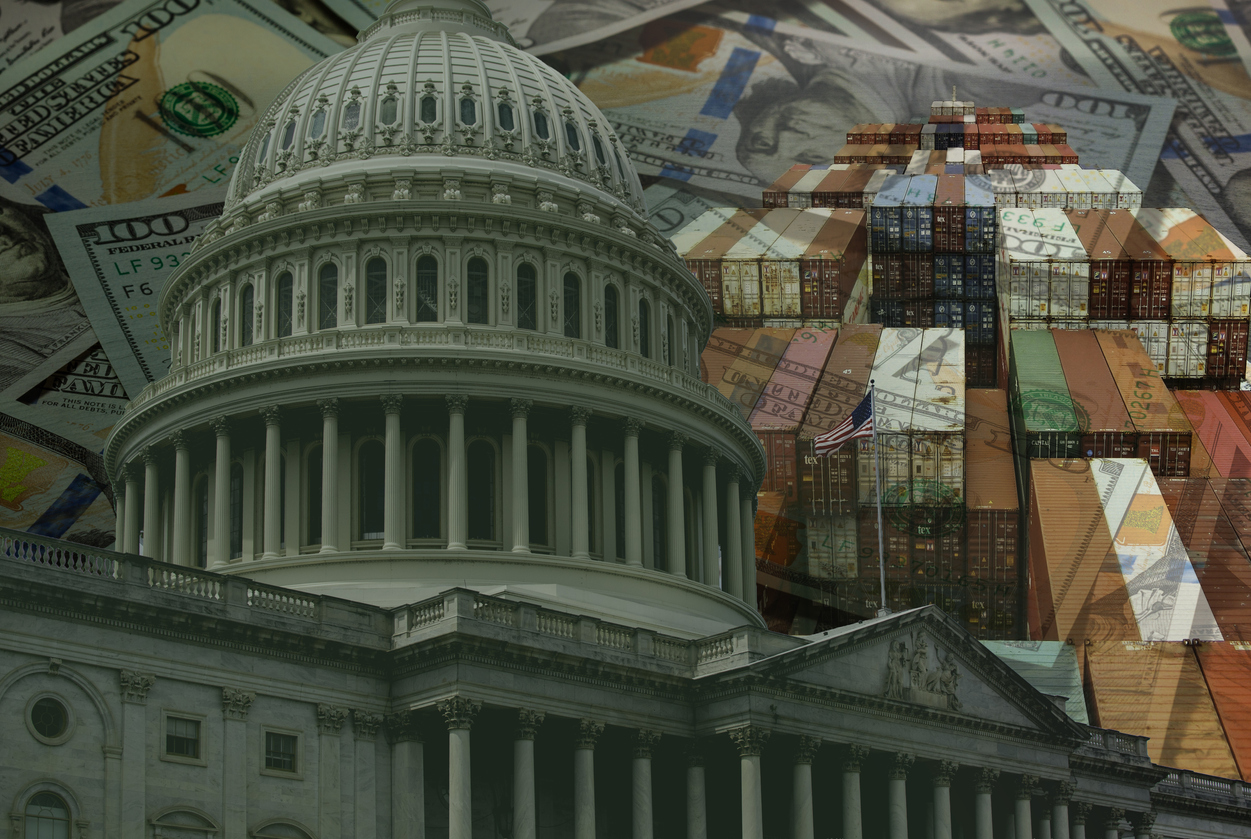
The concentration of economic and political power is one of the most urgent problems we face in the United States today. Too many of us cannot secure the kind of decent job that pays enough to send our children to school, to fund quality health insurance and cover serious medical emergencies, and to cover rent for a respectable apartment or to accumulate capital to buy a house.
President Trump claims he wants to bring manufacturing back to the United States, and he insists the tariffs he has levied will accomplish this important goal. But to truly solve this problem, we need to examine why manufacturing left in the first place. Why is the United States today less competitive than other countries in the contest to attract and safeguard job-creating businesses? What policies can address the issue?
Respecting human rights
Human rights—including economic, social, and cultural rights and the rights to a quality education, access to healthcare and housing, a healthy environment, and decent jobs—are rarely discussed in relation to industrial policy and President Trump’s tariffs. In fact, the United States is one of the few countries in the world that does not recognize economic rights, even though it ratified the International Convention on the Elimination of All Forms of Racial Discrimination, which includes economic rights. This is due, in part, to resistance from free market advocates, who describe these rights as a form of socialist intervention in the market system.
This is an argument made in bad faith: Respecting human rights does not require government ownership of the means of production. It does, however, require investment in everyone. With respect to the right to health, some countries, like Norway, invest in a national healthcare system, while others, like Switzerland, rely on insurance schemes. Meanwhile, President Trump has imposed tariffs that are a significant intervention in the free market and has promoted US government ownership in Intel and other businesses—yet few would describe him as a socialist.
In fact, human rights apply to all economic and political systems and form the basic level of development needed for everyone to live well. Economic, social, cultural, political, and civil rights are all critically important to creating dynamic economies.
Wealth inequality, outsourcing, and tariffs
The US economy has created a great deal of wealth, but that wealth—and the power it provides—is concentrated in the hands of a few. The numbers are stark: the least wealthy half of Americans—66 million people—hold about half of the wealth of the country’s most wealthy 905 citizens. Politicians and market advocates instrumentalize the “health” of the economy as a pretext to deny workers higher wages, healthcare, or pensions. Treating employees fairly or limiting the pollution imposed on our community, we are told, will cause the sky to fall. The economy will contract, GDP growth will stagnate, and, crucially, investors will receive lower returns. While investors may receive lower returns, any positive social impact—including economic growth driven by demand and higher wages—is treated as irrelevant.
Many US companies have shuttered domestic manufacturing plants and relocated operations to other countries to maximize returns for their shareholders, disregarding the negative impact of such moves on both employees and local economies. In the end, these decisions benefit other countries, including China, by allowing them to invest in their citizens’ right to health. In China, the rate of health coverage stands at about 95% compared to 92% in the overall much wealthier United States.
The movement of jobs out of the United States—a free market decision made with no regard for human rights—has deeply undermined the lives of citizens. It has helped to create a segment of the population that no longer has access to decent jobs, decent healthcare, or enough money to pay for housing and the education of their children—a cascade of losses precipitating issues with drugs and deaths of despair.
Tariffs making goods more expensive for US consumers are a regressive tax and won’t, in and of themselves, fundamentally change how and where companies choose to produce, especially with robotics growing in importance for manufacturing. Each industry and each calculation is different, so blanket tariffs levied on whole countries, as opposed to specific industries, make little sense. Trump’s approach is a blunt instrument where a scalpel would yield better results. Even after the US Supreme Court found President Trump’s tariffs to be a tax and therefore outside his authority to impose, he continues to indicate he will instrumentalize tariffs despite his lack of authority to do so and their negative impacts.
Moreover, the indiscriminate use of tariffs glosses over who was responsible for the deindustrialization of the United States in the first place and, more importantly, who profited from it and continues to do so. Understanding this will be essential to addressing the problem.
Toward a human rights economy
In the United States, both political parties have typically pushed for market-based solutions, and largely abdicated responsibility for their constituents’ rights to health, housing, education, and a clean and sustainable environment. Nor have they seriously pursued putting guardrails on the market to ensure the prioritization of human rights over maximizing return.
Rights should be considered public goods and too important to leave to the operations of the market. This idea appeared self-evident within the framework of Keynesian economics that was dominant when the United Nations General Assembly adopted the Universal Declaration of Human Rights in 1948. Since the 1980s, however, offshoring companies and their government facilitators have flouted the idea that the rights and well-being of people are more important than growth of the economy, even if enshrined in human rights law. Treating rights as public goods, financed through taxes and bonds, would radically change all Americans’ access to healthcare and other basic rights and make US-based businesses more competitive with those based in other countries. Employees’ health and quality of life would improve, leading to increased productivity, while the salary required to obtain adequate housing, healthcare, and education would decrease.
Due to the exceptional stance the United States takes on economic rights like education, housing, and health, companies must either absorb high labor costs or impose precarious conditions on workers. In contrast, governmental guarantees of economic rights in other countries mean that firms there can offer lower wages and benefits without decimating workers’ standards of living.
Violating human rights may produce short-run profits, but for their long-term well-being, people need a Human Rights Economy: an economy that respects the rights of people first and maximizing return to shareholders at a distant second. Oddly, this is already the law—human rights are part of the legal apparatus that constrains governments, companies, and investors—but it is widely ignored.
It is time to move from theatrical and rhetorical concern for those left behind by our current economic system to serious policies that promote all human rights for all of us.