
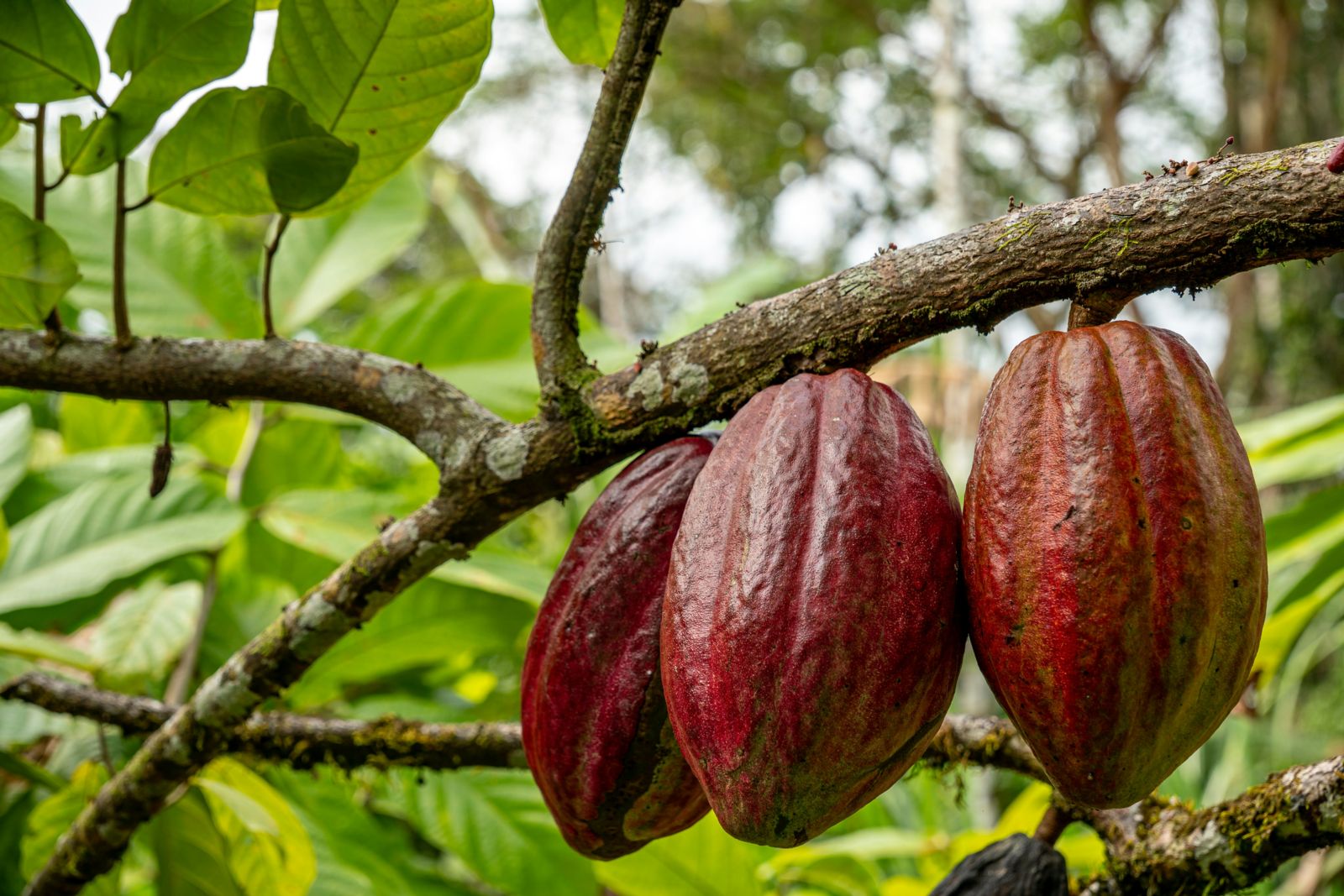
Barry Callebaut, the world’s largest cocoa manufacturer, processes roughly a quarter of the globe’s total supply each year. The company joined the governments of Côte d’Ivoire and Ghana and other organizations as a leading signatory of the Cocoa & Forests Initiative in 2017. Cocoa is a commodity thoroughly linked to forest destruction, and the partnership, representing 85% of global cocoa usage, aims to end deforestation across the cocoa supply chain.
The EU Deforestation Regulation has set a new standard for supply chain transparency. The cocoa industry is now actively building accountability systems that regulators can verify and scale. These offer a template for implementing trade and purchasing policies to protect the world’s forests, demonstrating what is possible when major market actors create credible, consistent demand for deforestation-free supply chains. The tools are proven and the legal frameworks exist. What’s needed now is for more legislators and industry leaders to use them.
Who is driving forest loss
Old-growth forest regions, tropical and boreal alike, are being cleared to supply markets for everyday goods in the world’s wealthiest nations. The EU, a mere 5.5% of the world’s population, drives a disproportionate share of trade-related global forest destruction—which means it carries a disproportionate responsibility to fix it. Seven commodities sit at the center of the destruction: cattle, soy, cocoa, coffee, rubber, palm oil, and wood-derived products (including paper).
Beyond driving climate change and biodiversity loss, deforestation-linked supply chains are also consistently tied to violations of Indigenous land rights, forced and child labor, and violence against forest defenders. Supply chain certifications and standards that include Free, Prior, and Informed Consent (FPIC) requirements treat forest protection and human rights protection as linked—because, in practice, they are. Examples include Principle 3 of the Forest Stewardship Council (on Indigenous peoples’ rights), the Roundtable on Sustainable Palm Oil’s Principles & Criteria, the Rainforest Alliance’s 2020 Sustainable Agriculture Standard. At the same time, forests under Indigenous stewardship experience deforestation at roughly half the rate of those without such protection. Securing land tenure is both a nonnegotiable human right commitment and an effective conservation policy.
Where the highest risk exists—and why it’s addressable
Beef is the single largest driver of deforestation globally, and Brazil is the world’s premier beef exporter. Its three most significant traders—JBS, Marfrig, and Minerva—together account for 67% of exports and 54% of deforestation. A 2025 study by the Brazilian research institute Imazon concluded that JBS, the world’s largest meat company, poses the greatest risk to forest loss, despite its 2022 pledge to eliminate deforestation from its supply chain. Human Rights Watch found that land-grabbers moved cattle raised on illegally deforested land—including land seized from Indigenous communities—through a laundering system that concealed their origins before reaching slaughterhouses.
Traceability requirements and state procurement rules can target this risk geographically and compare it against the latest scientific data on forest-risk commodities by region. Beef produced domestically in the United States, which is recognized as low-risk because its origins are verifiable and deforestation is not a documented driver, can be exempted from such requirements and rules. This helps keep compliance focused where it matters: on beef imported from locations at a high risk of deforestation.
This infrastructure already exists. The detection of “mad cow disease” (bovine spongiform encephalopathy) in North America in 2003 triggered the development of a national animal identification and traceability system to track cattle across state lines and through supply chains. Applying that same infrastructure to deforestation risk would be an extension of existing systems, not a new burden.
At the same time, cocoa demonstrates that deforestation-free sourcing at scale is already working. Major suppliers have built farm-level traceability, renegotiated supplier contracts, and mapped high-risk origin points. Procuring only deforestation-free cocoa is, at this point, a practical ask. The supply exists, the verification tools exist, and top industry leaders are ready. Pairing beef (the most impactful commodity) and cocoa (the most ready-to-implement one) as a starting point for state procurement reform is strategic.
A growing toolkit for states
State-level procurement is a powerful lever that doesn’t require federal action. Illinois and New York are both advancing legislation built on a practical sequence: start with the proven mechanism of tropical hardwood bans—New York has had one since 1995—and expand deforestation-free requirements to beef and cocoa supply chains. Other states can follow this example without waiting for action from international or industry forces.
States can also enter into traceability information-sharing agreements with one another and with commodity-producing regions. Global Forest Watch and the Trase platform already map commodity trade flows against deforestation risk at the farm and municipal level and provide procurement officers with real-time data.
Colorado’s 2022 executive order encouraging agencies to prefer deforestation-free vendors was a meaningful first step. Mandatory requirements like those Illinois and New York are now pursuing are the next. A 2025 report from California’s state auditor found that the state procured over $82 million in forest-risk commodities in 2023 and lacked the supply chain information needed to determine whether these purchases contributed to deforestation. That data gap is exactly what traceability requirements address.
The moment to act is now
The EU Deforestation Regulation establishes rigorous traceability standards along the supply chains of the top seven commodities driving global deforestation and prevents the import of specific products tied to them. In other words, the companies supplying forest-risk commodities must demonstrate that related products are not driving deforestation before they can access the EU market. It is the most significant trade-linked forest protection law ever passed, but it has now been delayed twice, pushed by large operators from 2024 to late 2026. The pressure for delay has not come from companies that prepared; Barry Callebaut, Nestlé, Mars, and Ferrero all argued publicly that the regulation should proceed on schedule and warned that delays penalize businesses that invested in compliance and reward those that did not. The regulation must proceed without further erosion, and the industry voices demanding this are a political resource advocates should leverage.
What makes the present moment so crucial is the convergence of this supply-side readiness with established regulatory architecture. The cocoa industry has built farm-level traceability systems that can meet markets’ demand for deforestation-free supply. The EUDR demonstrates what comprehensive due diligence requirements look like. State-level records have produced replicable playbooks.
Every year reform is deferred, untraceable, high-risk beef continues to flow from JBS-linked ranches into supply chains that end in government cafeterias and supermarkets. That is a policy choice. And it is one that states, cities, and legislatures can begin reversing today to keep more forests standing.