
There is now a consensus in the human rights movement: business as usual cannot continue.
The world is at an inflection point. Long-standing strategies falter in the face of armed conflict, deepening inequality, democratic backsliding, climate breakdown, and rapid technological change. At the same time, trust in democratic and human rights values erodes, multilateral institutions weaken, and serious violations go unpunished. For many human rights organizations, unprecedented cuts to foreign aid and a shrinking philanthropic sector compound these crises.
These pressures are not abstract. They shape daily decisions about where to focus, how to survive, and what the human rights movement will look like in the years ahead. This is the context in which the International Network of Civil Liberties Organizations (INCLO), which brings together 16 national human rights and civil liberties organizations from the Global South and North, convened its members and allies for a series of frank conversations. The resulting report, Hard Conversations for the Future of Human Rights, captures some of the most urgent dilemmas facing the movement today.
If we do not pause to reflect collectively, question our own assumptions, and adapt to global shifts, we risk becoming irrelevant at a time when rights protections are needed more than ever.
A system in crisis—and hard questions about where power lies
One of the clearest messages that emerged from these conversations is that the international human rights system is in crisis. Conflicts such as the war in Ukraine and the devastation in Gaza have laid bare the limits of international accountability mechanisms. Geopolitics, selective enforcement, and double standards often paralyze institutions meant to uphold international law.
In some cases, powerful states have actively undermined these systems. The United States, for example, has imposed sanctions that have weakened the International Criminal Court and restricted the work of Palestinian civil society organizations. These measures do not only harm their purported targets. By signaling that accountability applies only to some, they also hamper legal advocacy globally, isolate human rights defenders, and weaken multilateral institutions.
This reality raises an uncomfortable question: where should the movement invest its energy now? Should organizations continue to engage increasingly ineffective international and regional mechanisms? Or should they redirect efforts toward national and local struggles, where impact may be more immediate?
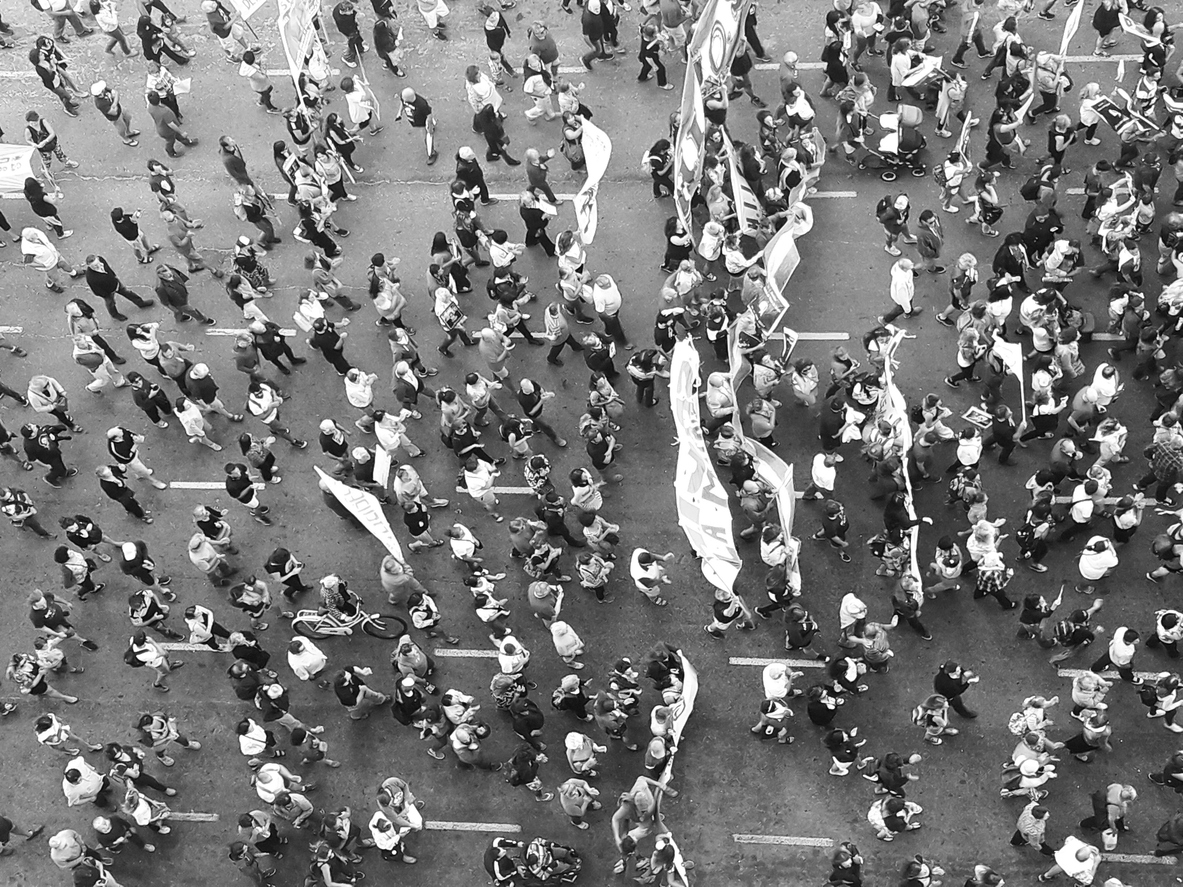
For Paula Litvachky of Argentina’s Centro de Estudios Legales y Sociales (CELS), the answer lies in recognizing where power ultimately resides. Change, she argues, comes from people—from their mobilization, grassroots organizing, and community building. As the rules of the post–World War II order shift and splinter, national organizations can still use international mechanisms tactically, but they should strive to build from the bottom up and support others fighting injustice. In many ways, this social and political organizing marks a return to the movement's origins.
Rethinking sustainability in a shrinking funding landscape
These strategic debates are inseparable from a parallel crisis in funding. Human rights organizations around the world are grappling with shrinking resources, growing restrictions on cross-border funding, and ongoing dependence on a small number of donors—particularly in the United States.
Nicolette Naylor, a sustainability expert with Ubuntu Global Philanthropy & Gender Justice Consulting, argues that this moment demands a fundamental rethinking of the movement’s financing. Overreliance on US donors exposes organizations to political risk, legal constraints, and donor priorities misaligned with local realities. It also undermines autonomy.
The alternative, she suggests, lies in building strong local funding bases rooted in domestic constituencies, complemented—not replaced—by international solidarity. This requires confronting uncomfortable truths about how philanthropy has operated, what has failed, and whose voices have been privileged. While difficult, this shift could ultimately strengthen the legitimacy and resilience of the human rights movement.
Owning our role as political actors
A stronger connection to local communities also requires greater clarity about how advocacy functions in practice. As Dalma Dojcsák of the Hungarian Civil Liberties Union (HCLU) puts it, human rights organizations are political actors engaged in political work—even when they are not aligned with any party.
This does not mean abandoning principles of independence. It means acknowledging that rights are enforced through power built by people organizing to demand change. It also means using language that resonates beyond activist circles and makes clear that human rights are not abstract ideals but practical tools that improve everyday life.
Escaping echo chambers and reaching the “persuadable middle”
Many organizations have become highly effective at communicating within their own communities but limited in their ability to reach those outside them. Akiko Hart of Liberty in the United Kingdom warns that this inward focus limits impact. If human rights are to regain broader public support, organizations must engage the “persuadable middle”: people neither hostile nor deeply committed to rights.
Doing so requires moving beyond in-group validation and NGO jargon and connecting rights to dignity, fairness, security, and other widely shared concerns. It also requires listening—not only broadcasting messages but also understanding why skepticism exists and responding to it seriously.
The need for a “quiet room”
All of this takes time—something many organizations no longer have. Repressive or crisis-driven contexts often leave staff too preoccupied with responding to urgent threats to plan for the future. Hossam Bahgat of the Egyptian Initiative for Personal Rights (EIPR) describes the need for a “quiet room”: protected space for long-term thinking, strategic rebuilding, and collective imagination.
Without such space, financial, organizational, and emotional sustainability is impossible. Burnout rises, innovation stalls, and movements remain reactive rather than proactive.
Making space for hard conversations
In this sense, Hard Conversations for the Future of Human Rights is an attempt to create a “quiet room” at the movement level. It does not offer easy answers. Instead, it surfaces shared dilemmas and invites deeper debates about power, funding, identity, and strategy at a moment of profound global change.
Such conversations are uncomfortable but unavoidable. Confronting these questions openly, collectively, and honestly provides the opportunity not only to survive this moment but also to emerge with renewed purpose.
The work continues—in courts and communities, in streets and classrooms, on national and local levels. But the future of human rights will depend on whether the movement can adapt, listen, and imagine new ways forward together.