
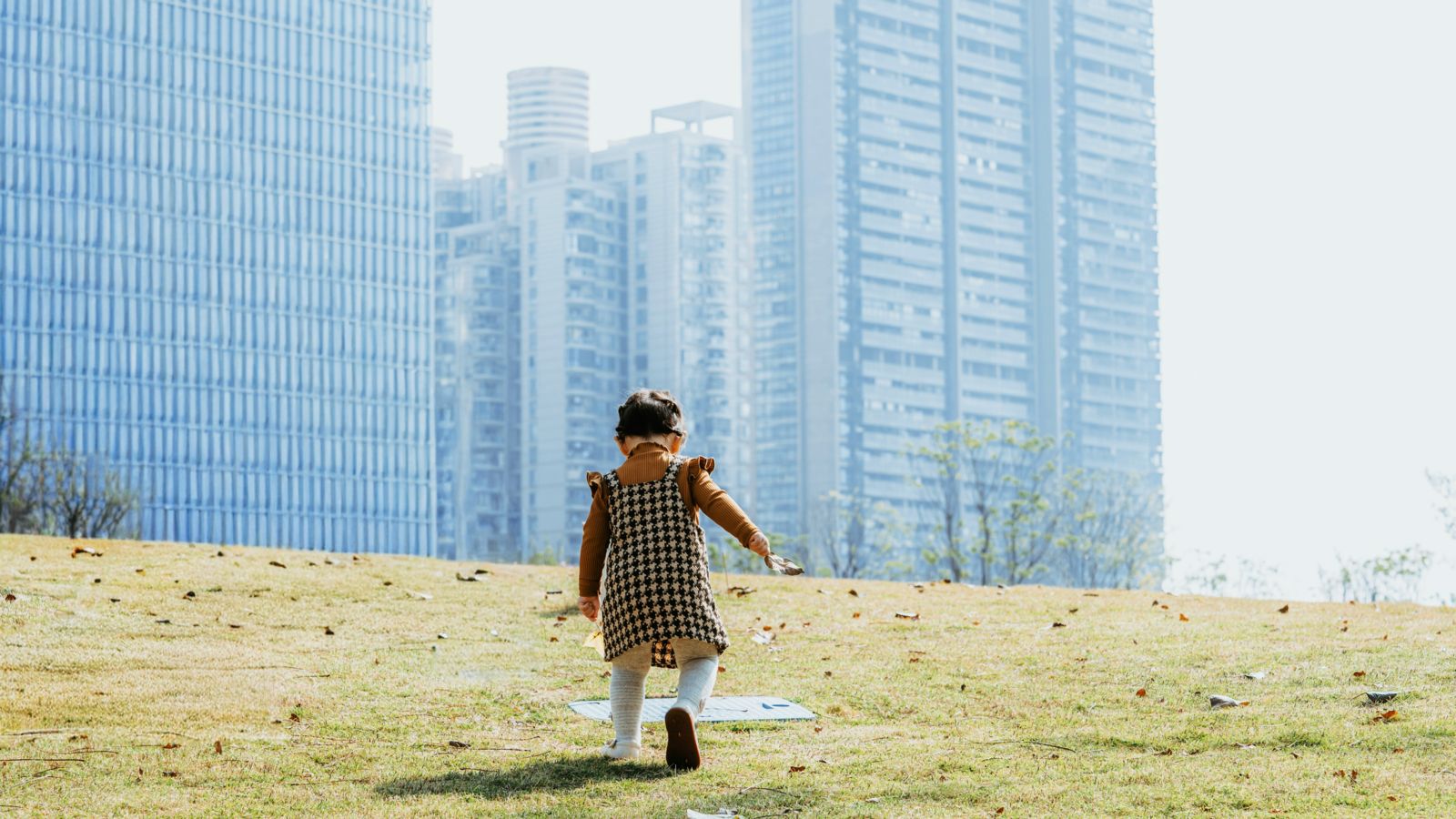
In response to the rapid growth of urban populations, the United Nations (UN) offered local governments a roadmap (GC26) in 2023 to embed children’s rights within climate action. By 2030, an estimated 60% of city dwellers will be under 18. Cities worldwide—home to most of the world’s children—are on the frontlines of the climate crisis. Rapid urbanization, intensifying climate risks, and inadequate infrastructure all disproportionately affect children. Yet, urban planning often overlooks children (age 0–18), despite their resilience and agency in pushing to keep global temperature rise below 1.5˚C.
“Cities are where the climate battle will largely be won or lost,” said UN secretary general António Guterres. “We possess enormous power to accelerate the shift to net-zero…cities can be climate titans: using our might and muscle to make a decisive difference in this decisive decade,” added London mayor Sadiq Khan. The proportion of people living in urban areas worldwide is projected to reach 68% by 2050. Cities contribute over 70% of global greenhouse gas emissions and are central to adaptation and mitigation. By 2050, local governments could reduce emissions by one-third on their own. With national collaboration, they could double this figure.
Translating GC26 into local action
GC26 provides guidance on how environmental degradation affects children’s rights, recognizing their right to a clean, healthy, and sustainable environment while outlining state obligations. Though it is non-binding, GC26 must be translated into local action. Cities, now home to over 56% of the global population, are where large-scale climate solutions can be implemented. The 30th Conference of the Parties to the UN Framework Convention on Climate Change (COP30) emphasized implementation, giving municipal leaders an opportunity to embed children’s rights within their climate strategies, making cities more resilient and child-friendly. Local officials must adopt climate action aligned with GC26, with support from federal authorities, and regularly report on their progress.
Why GC26 matters
Children are not passive beneficiaries of climate resilience projects. As Francisco, a child climate activist, reminds us, children “must be protagonists, leaders, and agents of transformation in their communities.” GC26 provides a framework for turning international commitments into actionable local policies that advance climate action, resilience, and children’s rights. It emphasizes the fact that environmental harm disproportionately affects children from minorities, Indigenous groups, and vulnerable communities, as well as those with disabilities. Their best interests must guide all related laws, policies, international agreements, and development assistance.
States thus need to ensure that children’s right to be heard is respected in decision-making, protect their rights to freedom of expression with legal frameworks, and ensure access to accurate and reliable environmental information.
Although 196 countries have ratified the United Nations Convention on the Rights of the Child (UNCRC) and 195 countries are parties to the Paris Agreement, children’s voices remain largely absent from climate negotiations. It is urban local bodies (ULBs)—where policy meets practice—that shape the infrastructure, housing, public spaces, and emergency responses that directly affect children.
Converging urban risks and local climate action
In many cities, inadequate housing, water insecurity, limited sanitation, poor drainage, and lack of green spaces make disasters life-threatening, particularly for children in slums or other marginalized communities. Across cities worldwide, unsafe housing, poor air quality, and climate hazards disproportionately affect the health, education, and development of children. Hazardous particulate matter in Delhi is up to seven times above World Health Organization guidelines, while children in Central London face high levels of NO2 near schools. In Vancouver, wildfire smoke increasingly threatens child health. Informal settlements in Accra and Delhi compound these vulnerabilities through housing that residents do not own, poor sanitation, and flood risk.
UNICEF’s Child Friendly Cities Initiative (CFCI) has empowered children and youth to lead local climate action. Houston, recognized in 2023 as the first UNICEF Child Friendly City in the United States, developed the Children’s Outdoor Bill of Rights, ensuring all children have access to outdoor experiences and environmental rights that are designed with community input. In Decatur, Georgia, teens co-created a youth action plan with the City Commission, launching a citywide composting program to reduce methane emissions from organic waste. In Boulder, Colorado, following the 2021 Marshall Fire, children and youth participated in an “eco-healing” project, providing input for nature-based programs to support emotional resilience in wildfire-prone communities.
In Europe, Austrian cities Graz and Feldbach demonstrate how play, education, and civic participation can empower children to shape climate-resilient, child-friendly communities. Graz has transformed urban planning by extending children’s spaces beyond playgrounds into nature-based spaces of learning: edible gardens, trails, and seasonal workshops like “Experiencing Nature.” Nearby, Feldbach’s Kindergemeinderat program involves children in municipal decision-making and co-creating local solutions. Both cities show how structured youth engagement can ensure that children’s voices shape climate planning and local development.
In Barcelona, 11 schools have been transformed into climate shelters to enhance resilience to rising temperatures. Blue, green, and grey measures—water features, expanded vegetation, shaded areas, and improved insulation—create thermally comfortable and sustainable learning environments. Children actively participated in designing these spaces, linking education with environmental action. Funded under the EU Urban Innovation Action Programme, the initiative now serves school communities and the wider public during heat waves, setting a precedent for child-centered, climate-resilient infrastructure.
Localizing GC26
The Local Governments and Municipal Authorities Constituency (LGMA) gives cities a voice in UN climate processes and links local action to global climate goals. Ahead of COP30, they urged formal recognition of cities and regions, but the final text offered no mandate for local inclusion. Being closest to children, cities—with the right support—can turn GC26 into localized planning and action that strengthens children’s agency.
National governments, urban stakeholders, NGOs, and children must collaborate to integrate climate action into child-inclusive urban development, scaling successful local practices and providing technical and financial support to low- and middle-income countries. Collaboration among UNICEF, the UNCRC, and LGMA is essential to align local initiatives with GC26, with state parties supporting local governments and non-state actors ensuring their programs reflect its mandate.
By embedding GC26 into city plans, budgets, and programs, guided by children’s voices, local governments can build resilient infrastructure and empower the next generation.